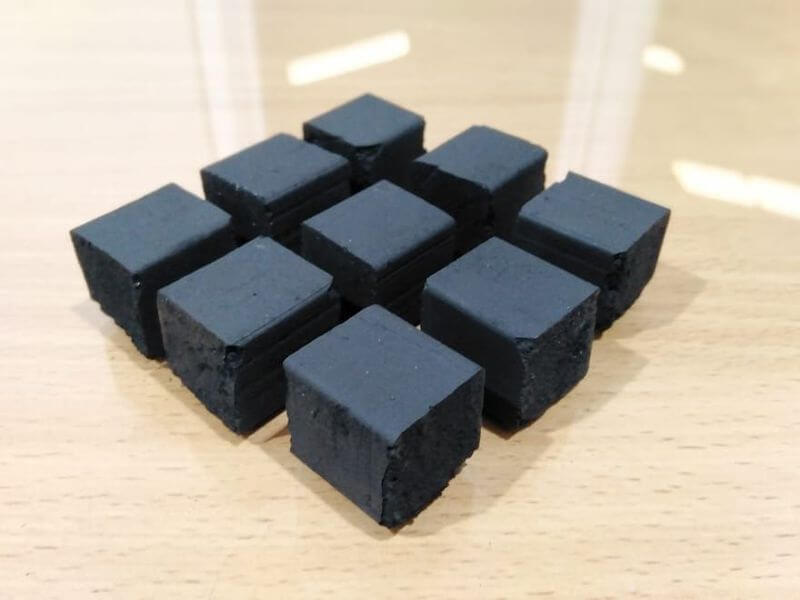
Mastering the process of How to make briquettes forms the foundation of success in the coconut charcoal export industry. This precise manufacturing sequence transforms low value coconut shells into high density, high carbon solid fuel. The journey demands strict adherence to quality control, advanced machinery, and expertise in managing the physical and chemical properties of carbon. This guide details the four critical stages necessary to produce export grade, premium briquettes actively.
The Carbonization Process
The first step in How to make briquettes is converting the raw coconut shell into charcoal, a process manufacturers call pyrolysis or carbonization actively.
Pyrolysis Technology and Quality
Producers create high quality charcoal using closed system kilns (retort kilns). Crucially, this method controls the oxygen supply, ensuring the shells burn down slowly and completely. Unlike traditional open pit burning, closed system pyrolysis yields a superior product with a higher Fixed Carbon (FC) content and far less volatile matter, which the market considers essential for a clean, stable final burn consistently.
Quenching and Initial Grading
Once carbonized, the production team must immediately extinguish and cool the charcoal. Subsequently, workers collect the raw charcoal lumps and subject them to an initial sorting process. This process removes any uncarbonized material or foreign contaminants. This initial cleaning step prevents impurities from compromising the final briquette quality effectively.
HighPressure Molding and Cutting
This mechanical stage directly determines the final shape, density, and structural integrity of the briquette actively.
High-Density Hydraulic Pressing
Operators feed the charcoal mixture into high pressure hydraulic briquetting machines. These machines compress the powder with immense force, eliminating air pockets and creating the ultra high density required for long burn times. Therefore, the press configuration determines the final shape cubes, pillows, or hexagons that align with specific market demands. This stage is crucial for ensuring the product meets the commercial standards on how to sell briquettes.
Precision Cutting and Forming
For products like shisha cubes, manufacturers integrate precision cutting mechanisms into the press line. Ultimately, this precision is a hallmark of premium production and vital to How to make briquettes that command a higher price.
Drying and Stabilization
Producers must stabilize the final product to ensure safety for shipping and optimal performance actively.
Drying Protocol
Newly pressed briquettes contain excess moisture; producers must dry them in large industrial ovens or dedicated drying rooms. They continue drying until the moisture content (MC) drops below the required. This step ensures the briquettes ignite easily and maintain a steady, high heat consistently.
Cooling and Safety Stabilization
Before packaging, the briquettes must undergo a minimum 14 day cooling and stabilization period in an isolated area. This crucial protocol is necessary for the Self Heating Test (SHT) certification and prevents spontaneous combustion during sea transit. Mastering How to make briquettes requires adhering to this safety mandate. For more technical documentation and standards, visit the Jacoid.com.
Conclusion
The complex answer to How to make briquettes involves strict process control at every stage from controlled carbonization and precise mixing to high pressure molding and careful stabilization. Adopting these advanced techniques is the only way producers manufacture the high quality, high FC charcoal that dominates the global export market.